The Affordable Housing Squeeze and the Non-Student Exodus
 Kristen Withers
Contributor
Kristen Withers
Contributor
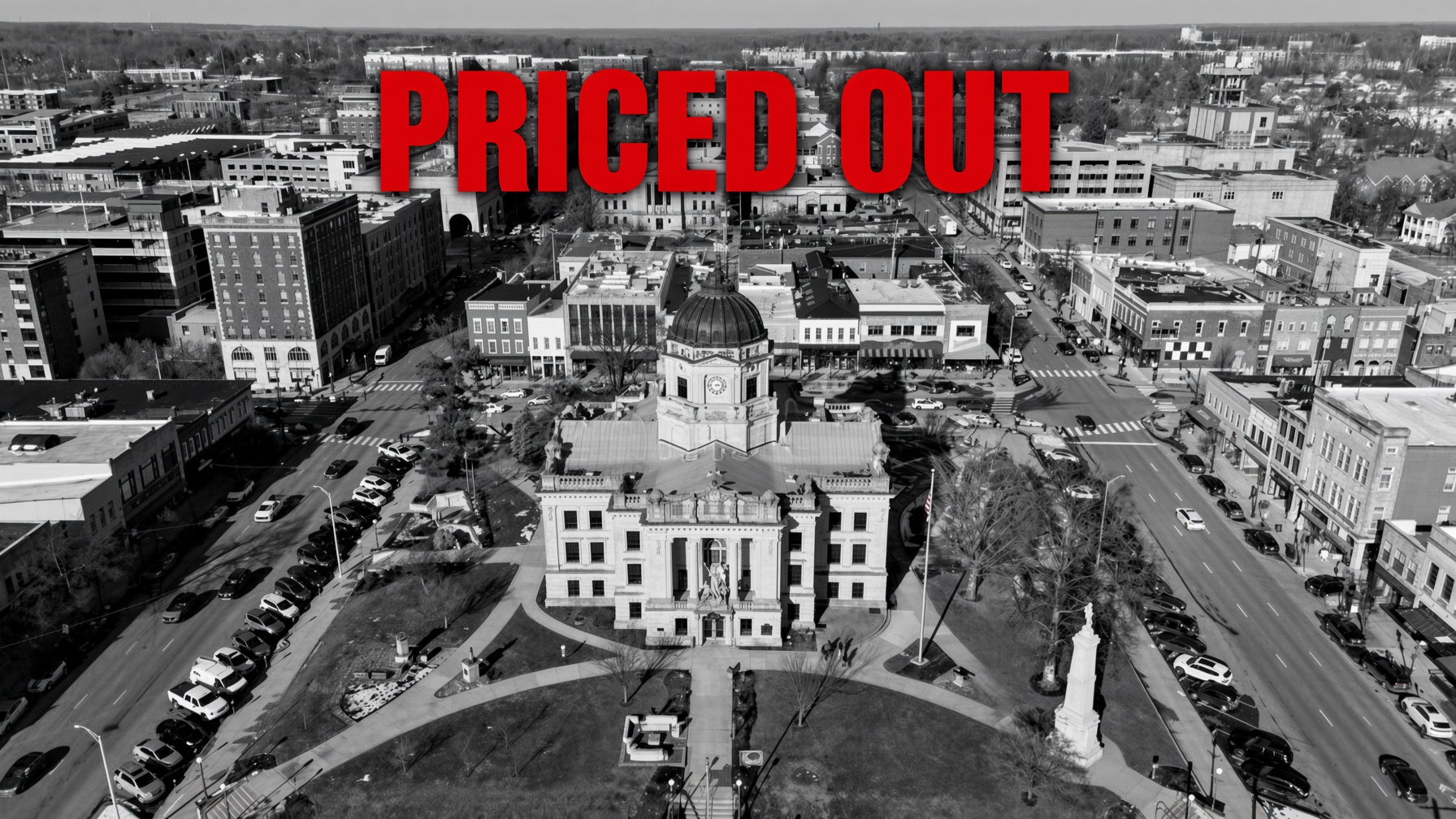
Bloomington still looks busy. Students fill the sidewalks, new apartment buildings rise near campus, and the downtown restaurants stay crowded on weekends. Look past the surface activity, however, and a quieter story emerges: the permanent, non-student population has been shrinking since 2021, school enrollment continues to fall, and the households that once formed the year-round core of the community are steadily being priced out.
The city’s own Housing Investment Report, released in November 2025, puts the problem in plain language. Bloomington is the most cost-burdened metro area in Indiana. Six in ten renter households spend more than 30 percent of their income on housing. That is not a temporary market blip. It is the predictable result of years of demand driven by university enrollment growth that far outpaced on-campus housing, combined with development patterns that favored student-oriented product over modest family housing.
What the Numbers Show
Exact continuous rent series for every bedroom size over the last five years are imperfect across public sources, but the direction is consistent and steep enough to matter. Fair Market Rent figures for a two-bedroom unit in the Bloomington metro rose more than 8 percent in a single recent annual update. Current market averages for typical apartments sit in the $1,500 to $1,700 range, with one-bedrooms commonly clearing $1,100–$1,200 and larger units climbing higher still. Older local reporting documented average annual increases in the neighborhood of 6 percent over longer stretches of the past decade. The cumulative effect is that the stock of modest, family-sized rentals that once existed at attainable prices has largely disappeared from the core market.
Meanwhile, short-term rentals have removed hundreds of whole homes from the long-term inventory, and the bulk of new construction has been calibrated to the student calendar rather than to teachers, tradespeople, hospital staff, or mid-level university employees who need to live here twelve months a year.
The Exodus and the Overflow
When non-student households cannot find or afford housing in Monroe County, they do not disappear. Many move to Bedford, Spencer, and other nearby towns and then commute back in. Monroe County draws more inbound workers from Lawrence County than from any other neighboring county. Median home prices in Lawrence County have long run substantially lower than those in Monroe, making the arithmetic work for families who have been squeezed out of Bloomington.
This arrangement is functional for the regional labor market. It is not cost-free for the receiving communities. Bedford and similar towns absorb additional traffic, pressure on local services, and housing demand that originated in Bloomington’s policy and market choices. The pattern turns those places into de-facto overflow territories. Local residents and officials in the surrounding counties have noted for years that they are absorbing Bloomington’s shortage while Bloomington keeps the higher-wage employment base and the tax advantages that come with the university economy. In most cases, the arrangement is tolerated rather than welcomed.
What the City Is Trying
City officials are not ignoring the problem. The Hopewell redevelopment on the former hospital site is the clearest attempt to change the pattern—smaller lots, pre-approved designs meant to speed construction, a deliberate mix of ownership and rental, and explicit targets for permanent affordability in the early phases. Permitting reforms and zoning adjustments aimed at making modest housing easier to build are also in motion. These are real efforts, and they deserve to be judged by results rather than intentions.
The open question is scale and speed. Producing a few dozen or even a few hundred attainable units will not reverse a multi-year erosion of the non-student residential base if the rest of the market continues to be dominated by student demand and higher-end product. School enrollment, year-round retail viability, and the ability of ordinary working households to remain in the community are the practical measures that matter.
Bloomington can remain a vibrant university town. The harder question is whether it can also remain a place where the people who keep the hospitals staffed, the schools running, and the local businesses open can still afford to live inside the county lines. The data and the commuting patterns already show what happens when the answer tilts the wrong way. The next few years of housing production will decide whether that tilt can still be corrected.
No thoughts yet — be the first.